Advocacy and Organizing Opportunities: Jesuits West CORE California Ignatian Advocacy Summit and PACT San José 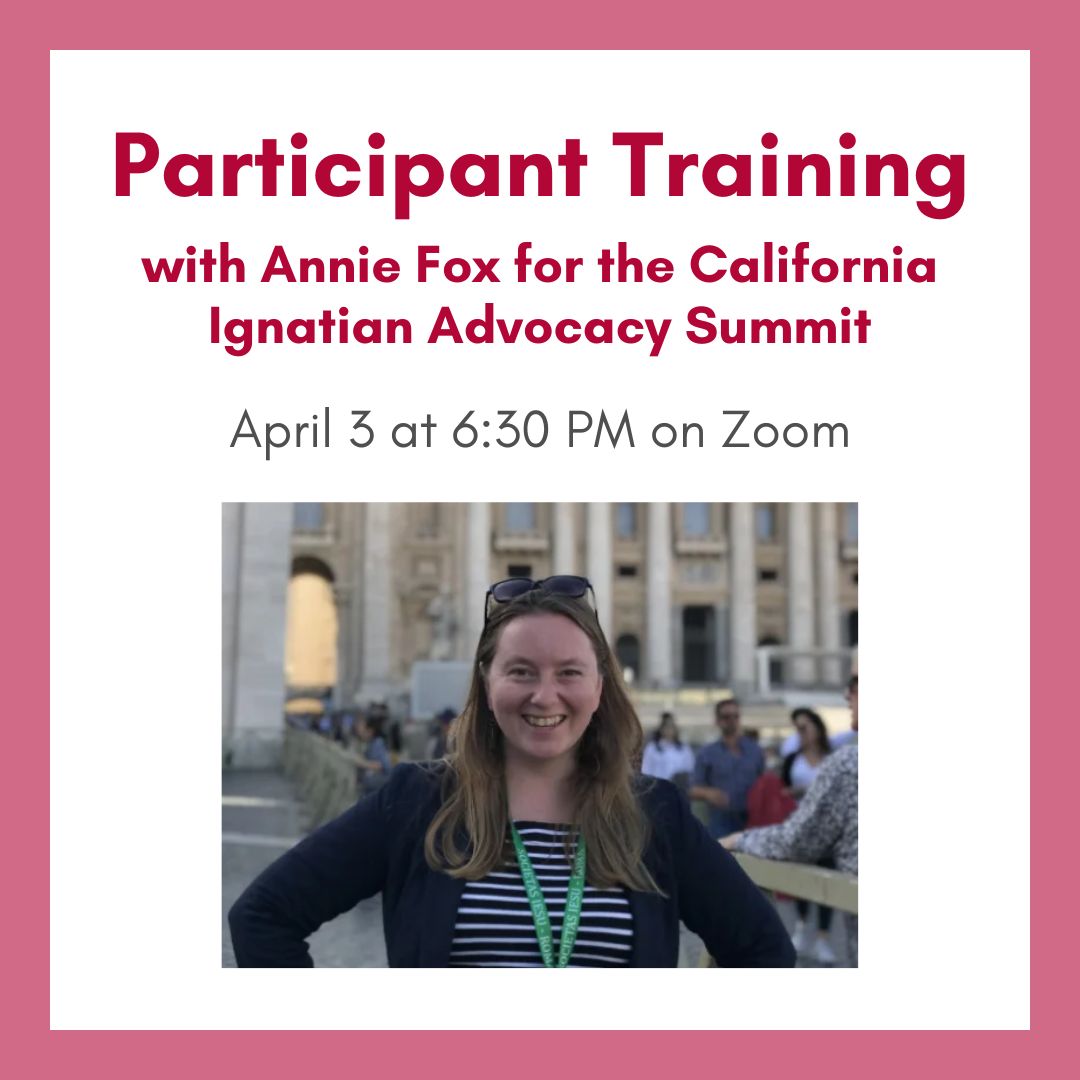 | Chad Raphael collaborated with Darcy Phillips of SCU’s Ignatian Center for Jesuit Education to organize advocacy trainings for students and staff at SCU. In December and February, Alyssa Perez of People and Communities Together (PACT), an interfaith organization leading South Bay campaigns on housing and immigrant rights, offered introductory trainings on community organizing and advocacy to SCU faculty and students. Anyone interested in joining PACT can do so on their website. In February, Annie Fox of Jesuits West CORE offered training for student leaders of the California Ignatian Advocacy Summit, which will take place in Sacramento on April 6-7. The Summit will focus on legislative advocacy for environmental and social justice to mark the 10th anniversary of Pope Francis’ encyclical Laudato Si’. Students and faculty interested in attending the Summit on April 7 can register here. |
Our New YouTube Channel  | The Initiative launched our YouTube channel, where you can find discussions, research presentations, and expert panels on food and climate justice, water and climate justice, youth and environmental justice, and our networks at SCU and across Northern California. Our videos highlight collaborations between academics, community leaders, and policymakers working toward sustainable and equitable solutions, including plenary panels from our most recent conference and many other events. Watch, subscribe, and stay updated! |
Jesica Fernández wins Early Career Scholarship Award 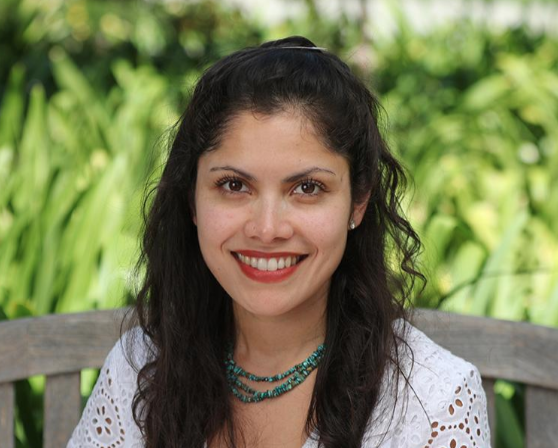 | The Initiative’s Jesica Fernández received the 2024 Michael Alexander Early Career Award granted by the Society for the Psychological Study of Social Issues (SPSSI). The award was established in 2005 to recognize early career excellence in scholarship as well as in service. For this award, scholarship is defined in terms of substantive academic contributions (theoretical, empirical, or applied) to the psychological study of social issues. |
New Article on Critical Participatory Action Research  | Jesica Fernández published an article with Michelle Fine (CUNY, The Graduate Center) in the journal Qualitative Psychology entitled “Methodological Retrospective: Critical Participatory Action Research.” The article describes the history, foundations, and ethical imperatives of engaging in critical participatory action research (CPAR) as a paradigm for democratizing research, decolonizing knowledge, and challenging dominant narratives. The authors highlight multiple participatory projects involving traditionally trained and community-based researchers in schools, prisons, and communities. |
SCU Networking Meetings on Youth, Environmental Justice, and Health  | In February, 15 SCU faculty and staff interested in research and teaching at the intersections of youth, environmental justice, and environmental health convened to explore opportunities for collaboration and support for their work. Participants learned about the range of research and teaching currently being done on these topics at SCU, shared resources to support this work, and envisioned new collaborations with SCU colleagues and potential community partners. The networking meeting was organized by the Initiative’s Jesica S. Fernández and Chad Raphael. |
Students Present at 2024 American Geophysical Union Conference 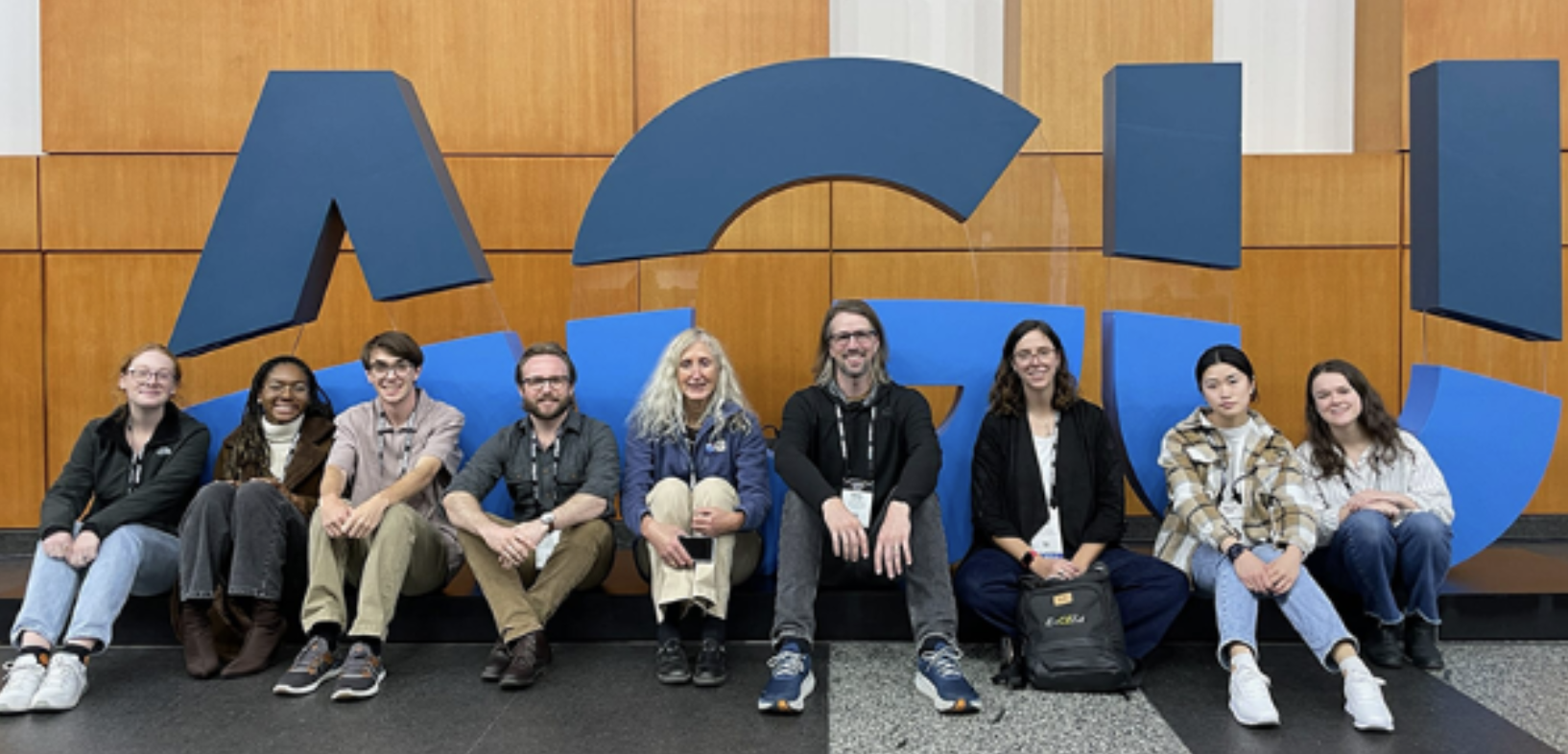 | Iris Stewart-Frey co-mentored six students in the Water and Climate Justice Lab to present their research at the American Geophysical Union conference in Washington D.C., including Dana Johnson (Civil, Environmental and Sustainable Engineering ‘26) and Environmental Studies & Sciences majors Samantha Lei (‘26), Elyse Kenyon (’25), Stephanie Davis (‘25), William Alexander (‘26), and Emma Young (‘24). The students presented their work on mapping Concentrated Animal Feeding Operations (CAFOs) and assessing their impacts on groundwater in the Central Valley, conducting a domestic well testing program in the Central Valley, assessing rainfall changes in Northern Nicaragua, and analyzing the ethical and engineering perspectives of the 2023 levee failures in the Pajaro Valley. All posters reflected the environmental justice dimensions as well as scientific aspects of the students' projects, and were very well received. The students were engaged in lively discussions with other researchers and came away with many new ideas. SCU colleagues who co-mentored some of these students included Rocio Lilen Segura, Ed Maurer, and Aria Amirbahman from Civil, Environmental & Sustainable Engineering; Jake Dialesandro and Will Rush of Environmental Studies & Sciences; and David DeCosse of the Markkula Center for Applied Ethics. |
The Politics of Coastal Reclamation in Indonesia  | Ryan Tans (formerly of SCU Political Science, now at Northern Arizona University) published "Social Movements and Climate Adaptation: The Provincial Politics of Coastal Reclamation in Indonesia" in the journal Perspectives on Politics. Tans examines movements of environmentalists, fisherfolk, and coastal residents that oppose the infilling of coastal waters and wetlands. The article applies the concept of political opportunity to explain the variation in the ability of anti-reclamation movements to achieve their goals. This research was informed by interviews and fieldwork that were facilitated by a grant from the Initiative awarded to Ryan and Naomi Levy (SCU Political Science). |
Sibyl Diver - Stanford University 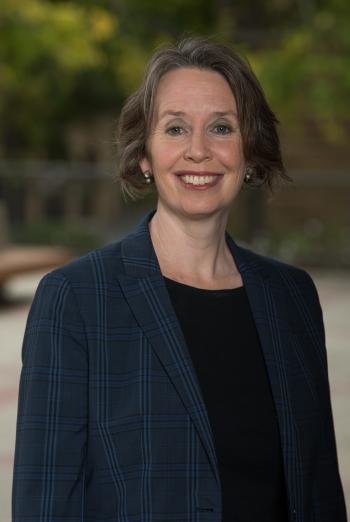 | Sibyl is an Environmental Scientist and Lecturer in Stanford’s Earth Systems Program and the Co-Lead of Stanford’s Environmental Justice Working Group. In addition to sharing her wisdom as a valued member of the Initiative’s Advisory Board, Sibyl has collaborated with the Initiative’s Iris Stewart-Frey and others to create the Northern California Environmental Justice Network, which has attracted 375 members from academia, community organizations, and government agencies to share information and organize events.
For over two decades, Sibyl has partnered with community leaders on issues of Indigenous peoples and salmon around the North Pacific – in the Russian Far East, Alaska, Canada, and the US. She does community-engaged research on Indigenous water governance from an allied perspective, focusing on Pacific Northwest salmon watersheds. She received her PhD from Berkeley's Department of Environmental Science, Policy and Management, where she helped build the Karuk-UC Berkeley Collaborative, a group supporting the Karuk Tribe's eco-cultural revitalization strategy in Northern California.
Sibyl and her co-authors – including Ron Reed, a traditional Karuk dipnet fisherman and a cultural biologist for the Karuk Tribe of California – have presented their work several times at conferences and events organized by the Initiative at SCU. Their most recent journal article, “Recasting Klamath Dam Removal as Eco-Cultural Revitalization and Restorative Justice through Karuk Tribal Leadership,” examines the sociocultural impacts of the historic Klamath River dam removal and river restoration through Karuk knowledge.
All of us at the Initiative are grateful for Sibyl’s good example of how to be a community-engaged researcher and teacher, her valuable advice to the Initiative, and her contributions to building a Northern California network for environmental justice. |
|
Environmental Justice and the Common Good Initiative
Santa Clara University
500 El Camino Real
Santa Clara, CA 95053
environmentaljustice@scu.edu
|
|