Ground Truths Book and Webinar Series on Community-Engaged Research for Environmental Justice 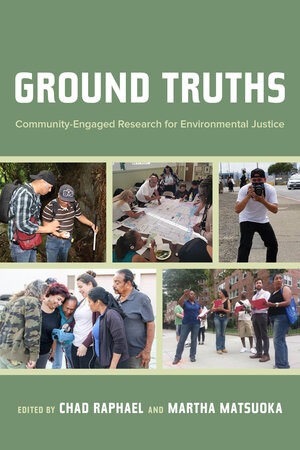 | Chad Raphael published Ground Truths: Community-Engaged Research for Environmental Justice, a new book from the University of California Press - Luminos, co-edited with Martha Matsuoka (Occidental College) and co-authored with over 15 scholars from across the country. Published open access, the book shows how community-engaged research makes unique contributions to environmental justice by centering local knowledge, building truth from the ground up, producing actionable data that can influence decisions, and transforming researchers’ relationships with communities for equity and mutual benefit. The co-authors employ an original framework that shows how community-engaged research and environmental justice align, which links research on the many topics treated in the chapters—from public health, urban planning, and conservation to law and policy, community economic development, and food justice and sovereignty. In February and March, the Initiative and Occidental’s Urban and Environmental Policy Institute organized a webinar series based on the book, which is archived on the Initiative’s website. |
New Sources on Participatory Action Research for Decolonizing Research and Transformative Justice  | The Initiative’s Jesica S. Fernández published “Disciplinary Disruptions: Strategies toward a Decolonial Community Psychology Praxis,” a chapter in the edited volume, Decolonial Psychology: Toward Anticolonial Theories, Research, Training, and Practice. Featuring three interconnected practices via reflective case studies of Participatory Action Research (PAR) collaborations, the chapter describes radical relationality, epistemic justice, and transformative justice as necessary strategies. When brought together, these strategies characterize an ethical research praxis within and beyond community-engaged transdisciplinary work, from psychology to education to public health and environmental sciences. Additionally, Jesica co-authored a chapter in the APA Handbook of Research Methods in Psychology. The chapter describes critical approaches to research and inquiry within Participatory Action Research (PAR) that are grounded in an ethical responsibility to disrupt the status quo by understanding and addressing injustice in particular contexts. Critical inquiry involves a number of threshold commitments and intentional actions: to expand the possibility of who can participate in socially sanctioned research; to empirically investigate intersubjective, lived realities that are shaped by complex relationships to history, place, and power; and to commit to transformative social and systemic change, bridging the gap between "what is" to "what could or must be." |
Shaping Policies for Clean Water Access in the Central Valley 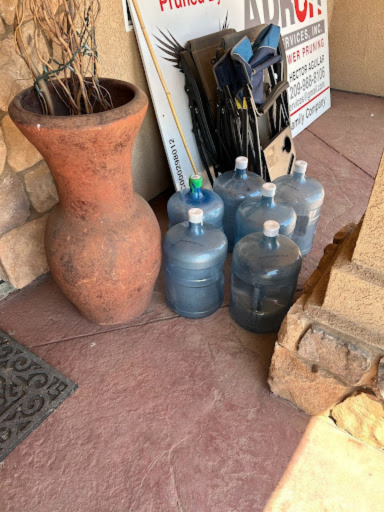 | In response to long-standing and widespread contamination of shallow groundwater by nitrates in the Central Valley, the California Water Board initiated the CV-SALTS process to work collaboratively with stakeholders to create and implement a comprehensive plan to ensure communities with high levels of nitrate in their groundwater have access to safe drinking water. Community-driven research by the initiative’s Iris Stewart-Frey and colleague Jake Dialesandro in collaboration with California Rural Legal Assistance provided extensive public comments to the Kings, Modesto, and Turlock priority basins. Prior rounds of public comments by this group have led the Water Board to enforce and strengthen policies designed to ensure clean water access in EJ communities. More on this work is found on the Water and Climate Justice Lab page. |
Native Plants for Stewardship, Harvest, and Sustainable Use in Ohlone Cultural Projects  | The Initiative announced our newest research grant recipient in collaboration with the Miller Center for Social Entrepreneurship. Maia Dedrick (Anthropology), Amy Lueck (English), and Becca Nelson (Center for Sustainability - Forge Garden) received $5000 to support the purchase, cultivation, digitization, and public interpretation of Native plants for SCU’s Forge Garden. This work will support Ohlone cultural knowledge sharing and public education about land stewardship, cultivation, and uses of plants for traditional practices like basketry and food preparation. Ohlone youth will engage with plants during an annual summer cultural camp, while SCU students and community members will learn from interpretive materials featured at the Forge, including in-person signage and a stop on the Thamien Ohlone augmented reality campus walking tour that is currently in development. Miller Center will fund the project to advance SCU’s vision to create a more humane, just, and sustainable world while promoting Miller Center’s mission to eradicate global poverty and protect the planet, and the Initiative’s mission to foster community-driven research for social and environmental justice. |
Public Scholarship on the Importance of Disability Inclusion for Climate Resilience  | Molly M. King (Sociology) and Christina Nelson (Sociology and Spanish '24) wrote an article for 360info.org on the importance of disability inclusion for climate resilience planning. The article underscores the heightened vulnerability of over a billion people with disabilities to the impacts of climate change, particularly in low- and middle-income countries. Despite their increased risk, the disability community has been largely overlooked in climate change research and planning. The article advocates for disability-inclusive climate justice, emphasizing the need to involve individuals with disabilities in resilience planning, diversify activism to consider various identities, and create accessible programs and policies to enhance climate change adaptive capacity for all. The article can be republished by other news sites under a Creative Commons license. |
|
Environmental Justice and the Common Good Initiative
Santa Clara University
500 El Camino Real
Santa Clara, CA 95053
environmentaljustice@scu.edu
|
|