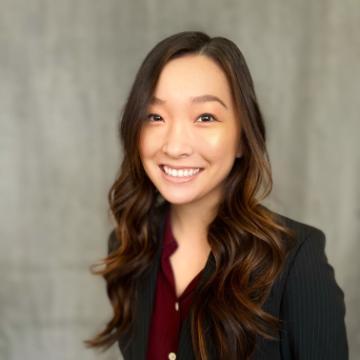
Natalie Duong
Biography
1. Why did you choose SCU?
Growing up in the bay area and having an older brother graduate from SCU, I always had SCU on my radar. However, I ended up choosing to attend because of its relatively smaller class size.
2. What was your experience like at SCU?
More than anything, I will treasure the relationships and mentorships I gained at SCU. Being at a smaller university, it was easy to get to know the faculty who was always so supportive of my ambitions. As a bioengineering major and a dance minor, I had mentors in both departments who helped me pursue my own passion projects at SCU whether it be bioengineering exosomes in the lab or creating a dance show centered around gender roles in society on the stage. There were so many opportunities to create something of my own at SCU, and I am grateful to have had early experiences in innovation.
3. How did your SCU experience enable your future directions?
I was on the pre-med track for bioengineering at SCU and am now in my third year of medical school at Midwestern University. As a bioengineering major at SCU, I learned how to understand biologic processes and how they may potentially be manipulated rather than simply memorizing them. This approach to learning has carried into my medical training and has already proven beneficial.
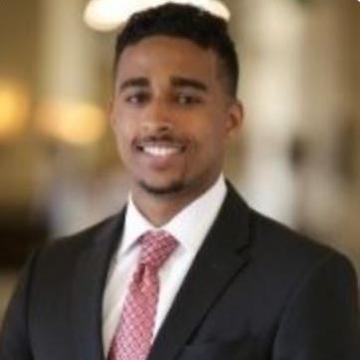
Nathaniel Girma
Biography
1. Why did you choose Santa Clara University's School of Engineering?
Nate is originally from San Jose, and was not entirely sure what to look for when it came to the college search. Though he did not necessarily have a dream school when it came to colleges and initially thought he wanted to be farther away from home, he had heard of Santa Clara’s reputation as a university in Silicon Valley and was immediately attracted to it. According to Nate, the selling points far outnumbered many other institutions: small class size, location, ability to form meaningful relationships with professors and faculty members. Nate describes himself as the type of student who has not always excelled at in-class learning. From the get-go, Nate knew that Santa Clara could provide him with the resources to receive an excellent education despite this. Though Nate did not know exactly what he wanted to do when he decided to attend Santa Clara University, be it psychology, biology or a related field, he found himself intrigued by Bioengineering and ultimately chose to give it a shot. After his first year at Santa Clara, Nate transferred into Bioengineering from Undeclared.
2. What has your journey been like since leaving SCU?
After graduating from Santa Clara, Nate joined Epic Careers, a software company, in Madison, Wisconsin. As early as his junior year at Santa Clara, Nate began to come to terms with the fact that he could not see himself working in a laboratory or similar, research-related setting for the rest of his life. After many difficult discussions with faculty and staff in the Bioengineering department, he joined a company where he knew he would be surrounded by excellent software developers and engineers. At Epic, Nate worked on a team that addressed Epic’s software-related bugs, eventually deciding that it was not the right fit for him. After a year at Epic, Nate returned to San Jose and started in a new career path with Planisware as an Associate Consultant. He now works on an implementation team, working directly with businesses to understand their organizations and then apply the Planisware software to best suit their needs. In this new role, Nate works to configure Planisware’s products to help businesses better organize their work and improve their working efficiency.
3. How has SCU helped you achieve your goals since graduating?
Reflecting on his experience at Santa Clara in the School of Engineering, Nate recalls spending quite a bit of time speaking with the school’s faculty members about his career path, decisions that would ultimately shape his long-term goals. He remembers numerous occasions where individual professors helped him through difficult periods in his college experience and their willingness to have difficult conversations about his future. Even when Nate returned to San Jose from Madison, some of the first people he reached out to were professors at Santa Clara, all of whom offered suggestions on jobs and networking opportunities. The environment fostered at Santa Clara allowed him to build important and meaningful connections with professors and faculty, something Nate will remember forever.
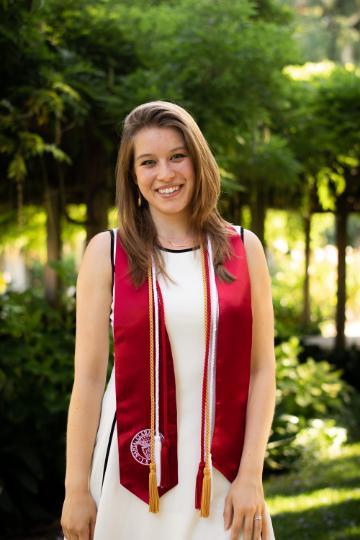
Delaney Gray
Biography
1. Why did you choose Santa Clara University's School of Engineering?
I chose SCU's School of Engineering because of the combination of incredible faculty and their intense focus on creating a collaborative environment. I was looking for an engineering program that could provide me with hands-on work experience, personalized mentorship, all while fostering an interdisciplinary and collaborative culture amongst my peers. The size of the program ensures that you are never lost in a sea of students -- your professors come to know you on a first name basis, you are able to get into top tier research labs as an undergraduate, and you develop close relationships within your BME cohort. Even now, 2 years after graduation, I feel comfortable reaching out to past professors and classmates; Whether it be to ask an engineering question, request a letter of recommendation, or simply check in.
In addition to the quality of their engineering curriculum, I selected SCU because of their emphasis on educating the whole person. While many engineering programs focus solely on core engineering skills, SCU requires its engineers to participate in their top tier liberal arts core curriculum. The range of humanities, engineering communication, and bioethics courses that I took have proven a significant advantage in both industry and academia. SCU's well-rounded curriculum will set you apart once you graduate, ensuring that you have the critical thinking, communication, and public speaking skills needed to lead a highly interdisciplinary team.
Finally, I selected SCU because you are given the opportunity to finish your engineering degree with a Senior Design Project -- a capstone engineering project that allows you to do a deep dive into the research project of your choice with a self-assembled team. My project profoundly shaped my career trajectory -- helping me to land my first job, solidifying my resolve to pursue my PhD and will result in a first-author publication.
2. What has your journey been like since leaving SCU?
After graduating in 2019, I began my career as an Advanced Biomanufacturing Engineer at Lawrence Livermore National Laboratory . A job that I was able to land thanks to my Senior Design Project experience, outstanding letters of recommendation from SCU faculty, and SCU's fantastic location (and reputation) within the Silicon Valley, In that position, I was able to leverage my past Senior Design experience in microfluidics/fabrication and tissue engineering to design 3D cancer models.
After one year at LLNL, I moved on to graduate school, where I am currently pursuing my PhD in Biomedical Engineering at Boston University. I intend to use my dissertation to design organ-on-a-chip models of vascular disease.
3. How has SCU helped you achieve your goals since graduating?
Since graduating, SCU has helped me to land both my first job at a National Laboratory and get into a top tier Biomedical Engineering PhD program at Boston University. SCU's engineering program truly offers a fantastic combination of personalized mentorship, collaborative faculty, and engineering work-experience that ensure that you will not only succeed post-graduation, but will thrive within your field.
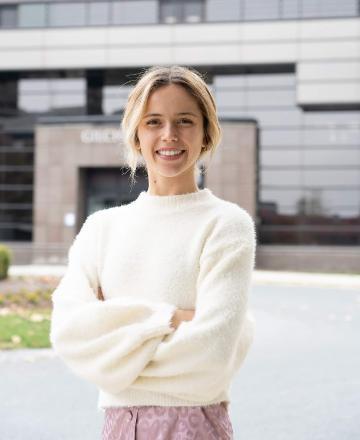
Chloe Herczeg
Biography
1. Why did you choose SCU Bioengineering?
I chose SCU BIOE for a multitude of reasons. Going into college, I was unsure of what I wanted to do moving forward. My goal was to be able to build my skill set so that one day I would be able to integrate my scientific mind with my creative nature. To that end, the major taught me how to problem solve and think outside of the traditional, linear-mind set, which has since helped propel my success in industry.
2. What were your most important academic experiences?
My most important academic experiences came during my senior year of college. The first was learning how to learn.
As a result of the small class sizes in the BIOE major, I had ample opportunity to meet with instructors. During this time, my professors' and I narrowed in on my specific learning style and identified what methods of reviewing materials worked best for me. This changed my entire approach to learning and made it both more enjoyable and effective.
The second prominent experience was learning how to navigate difficult team dynamics. This lesson was particularly notable during my senior design project, which required my teammates and I to optimize our skills and manage a multifactorial project. Identifying how to utilize my own strengths, as well as promote the success of my teammates, has been a defining skill in my professional career that has set me apart from my peers.
3. What has the SCU degree enabled you to do?
Over time, my degree has provided me with the foundation for which I have launched my career. The two greatest gifts that a bioengineering education gave me were 1, critical problem-solving capabilities, and 2, flexibility to pursue various career paths. Starting out at my first job, I realized that my teamwork and troubleshooting skills set me apart from my peers. It was because of this that I was given exponentially more responsibility and had the opportunity to lead a team to build a new lab in Shantou, China. After a few years, I thought more about the intersection between my skills, interests, and passions and decided to pivot in my career. Since this time, I have received my Masters in Biotechnology from Johns Hopkins University and will be starting medical school in the Fall. Going into undergrad, I would have never anticipated the direction my career has taken and am immensely grateful for the education that has allowed me to seize a multitude of different opportunities.
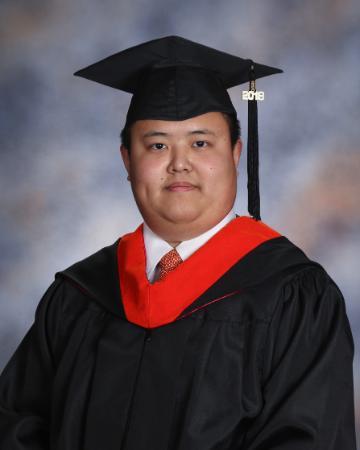
Senbao Lu
Biography
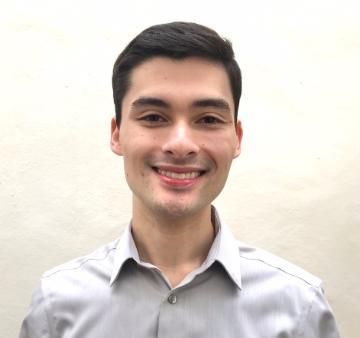
Roman Lyman
Biography
"The Bioengineering program at Santa Clara University provided me with wonderful opportunities to explore and develop my interests in the fields of biotechnology and biomedical engineering. As an undergraduate, I wanted to pursue my dreams of studying medical devices in a smaller, close-knit setting led by engaging professors and offering great facilities. With the encouragement and guidance of professors, I was able to deepen my understanding of topics ranging from bioimaging to biomaterials and medical device design and development through numerous research projects. In both undergraduate and graduate programs, the classes are taught by passionate faculty whose expertise aligns with the current industry, which ultimately helped me to prepare for internships and job opportunities in the field. My decision to remain at Santa Clara University for my graduate education centered around the desire to continue learning from advanced studies in such a personable and supportive environment. As a medical device engineer, the skills and knowledge that I’ve gained from the Bioengineering program through coursework and research projects have been invaluable for my job performance. The experience could not have been more memorable and I will always be thankful to the faculty for their guidance!"
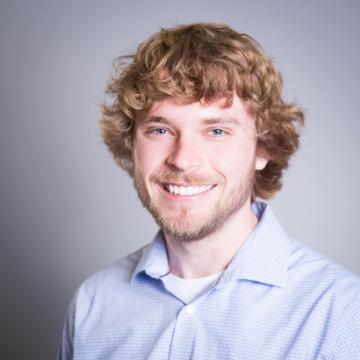
Atticus McCoy
Biography
1. Why did you choose Santa Clara University's School of Engineering?
When I was applying to schools, I honestly did not know what I wanted in a university. I was interested in bioengineering because I loved math and science and thought I wanted to go to medical school. So, I applied to bioengineering programs at small and huge schools, at very engineering focused and broader liberal arts schools. I applied to many schools I had not visited, including SCU. Frankly, the main reason I chose Santa Clara was because I received a great scholarship that made it super affordable for me and my family.
Luckily for me, SCU turned out to be a perfect fit. During my four years, I loved Santa Clara's emphasis on engaging you inside and outside of the classroom. I got to take a wide variety of classes through the core curriculum that enhanced and enriched my education beyond engineering, including classes in sociology, religion, ethics, and, my personal favorite, improv. Outside of the classroom, I joined Dr. Steven Suljak's chemistry lab during my first year, discovering a love of research that shaped my career path. I was a Student Ambassador for four years, improving my communication skills and finding a wonderful group of friends across the university. I explored the Bay Area and the surrounding areas through SCU's outdoor club Into the Wild. For me, SCU's biggest strength is that it allows students to receive a great education while simultaneously exploring their passions.
2. What has your journey been like since leaving SCU?
During my junior and senior year, I started looking for an ethical and personally fulfilling application of bioengineering. I started hearing a lot about plant-based meats, especially given Impossible Foods' nearby location in the Bay Area. I was super excited. The alternative protein industry seemed like a perfect place to apply my research skills to the broader goals of lessening the environmental impact of meat, improving human health, and improving animal welfare. I was also really interested in the novel research going on.
SCU gave me a lot of tools to start networking in the alternative protein field. I connected with people at different companies through professors, previous students, and a panel held on campus. I eventually accepted a job as a Research Associate at Beyond Meat in Los Angeles. Working at Beyond Meat has been a fantastic experience and has been everything I was looking for in an ethically-driven career.
3. How has SCU helped you achieve your goals since graduating?
As I said before, the opportunities I had at SCU helped me get my job. The engineering education I received helps me be an effective researcher, implementing a wide variety of the tools I learned. The extracurricular activities I did prepared me to be a collaborative team mate and to continue exploring my interests outside of work. As I look forward to the future, I know my education at SCU will help me as I continue in industry or if I eventually decide to go back to school to pursue a Masters or a PhD.
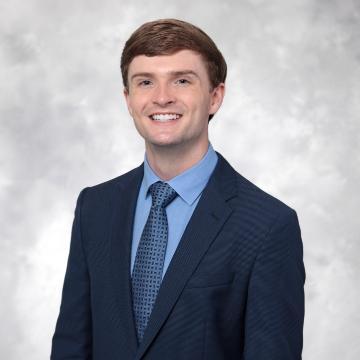
Erik Risa
Biography
1. Why did you choose SCU?
Attending Santa Clara University was one of the best decisions I have made, and I would not hesitate to make it again if given the opportunity.
One important deciding factor for me choosing Santa Clara University was the incredible Bioengineering Department, pre-medical advising, and extracurricular opportunities for research and internships in my areas of interest.
For those such as myself who are interested in becoming a doctor, the Bioengineering major has a special curriculum for pre-med students, which allows us to take all the classes necessary for applying to medical school and to be prepared to take the medical college admissions test (MCAT).
Aside from the classes and coursework, I had such a great feel the moment I stepped on campus. Everyone on campus, and particularly in the Bioengineering Department, was so welcoming on my tour day. They made the extra effort on my behalf to schedule meetings with the Department Chair and the Pre-Med advisor to go over what my four years at Santa Clara University would look like. The amount of effort SCU puts into its students and their futures sealed the deal for me, and I am so glad I decided to attend.
2. What was your experience like at SCU?
Within the first quarter at SCU, I met some of my closest friends in my introductory science classes whom I keep in touch with today; in fact, I recently recorded a podcast with a friend and fellow medical student this past month about our Pre-Med journeys.
I was able to balance my coursework and undertake a number of extracurricular activities such as Bioengineering research, working as a First Responder & Emergency Medical Technician for the campus, playing on the Club Lacrosse Team and in the Jazz Band, and Healthcare Ethics Internship experiences.
Something I most fondly remember was getting the opportunity to work one-on-one with my Professor on Bioengineering research; I marveled at the ways I was able to apply what I was learning in my classes to the quantitative materials research I was doing in the laboratory. The lessons I learned on research projects gave me great preparation in my future internships during Medical School.
3. What did your SCU experience enable you to do in your future?
My Santa Clara University experience put me in a great position to succeed in applying to and performing in Medical School. I applied during my junior year at SCU and was accepted to my top choice at the University of Washington School of Medicine. Once in medical school, I felt my Bioengineering background gave me a unique edge and insight into what I was learning in my classes and in the hospital.
It also opened doors to research projects and opportunities I might not have otherwise had access to. One thing I did not appreciate until later was the Alumni Network that Santa Clara University has to offer. For instance, at the beginning of COVID-19 pandemic, Medical Students were taken off of Hospital rotations both for our safety and to conserve limited Personal Protective Equipment resources.
As the first cases of COVID-19 showed up just 10 miles outside of my home in Seattle, I did not want to sit on the sidelines as all of this unfolded right in front of my eyes. I connected with a Santa Clara University alumnus at the University of Washington Medicine system who works directly with the sickest COVID-19 patients in the intensive care unit. Together, Dr. Nick Johnson and I undertook several research projects on COVID-19 patients, with one being accepted for publication just last month. https://onlinelibrary.wiley.com/doi/10.1002/emp2.12350
I cannot speak highly enough of my experience at Santa Clara University. The lessons I learned, the experiences I had, and the people I had the privilege to meet at SCU have all helped me to become not only the type of doctor I want to be someday, but also the type of person I want to be as well.
I am currently in my final year of medical school and am applying to do my residency training in Otolaryngology-Head and Neck Surgery. When I think back on my experiences leading up to this point, I know I would not be where I am today were it not for the phenomenal undergraduate education I had at Santa Clara University.