Research shows that facing stress is much healthier than running away from it. Relaxation exercises are designed using psychological theories. They are created to help you tackle your stress head on, rather than avoid or ignore it.
These techniques help you learn how to relax your body and mind. They are simple and easy to do every day on your own - especially when you experience stress. Remember, stress is incompatible with relaxation. You can’t feel both at the same time.
Here are some tips to keep in mind when doing these exercises:
- Start small, e.g. 5-10 minutes on a regular basis.
- Practice! Practicing when you are not stressed will allow you to use the skill automatically when you are stressed.
- Complete these exercises in a quiet place, where you can focus without interruptions from other people.
- Avoid distractions such as your cell phone & computer.
- Be comfortable! Generally a cool place, comfortable seated position, and loose clothing are best.
- Focus on your body and mind. Notice what you feel and where you feel it.
- Be non-judgmental - it’s ok if you aren’t doing something “right” or perfectly. Just do your best!
- Be patient during the exercises, not forceful or restless.
- Some techniques may work better for your than others - that’s ok!
Below are highly effective relaxation techniques. Each includes brief information on each exercise and an audio clip to guide you through the technique.
Deep breathing regulates the physiological fight/flight response that we experience when we are stressed.
Deep breathing is an exercise that is always available – you can take it with you anytime, anywhere.
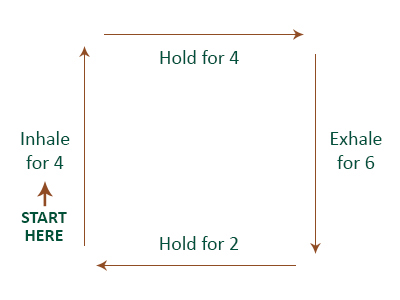
Square breathing is a deep breathing technique. The diagram below illustrates the breath cycle. Try to make inhales and exhales last for the full count, instead of ending before the count is over. If you start to feel dizzy or faint, reduce the count but follow the same pattern. Attempt to breathe into your belly, not your chest, for maximum benefit. For example, try putting your hand over your belly when you breathe, and feel it rise when you inhale and fall as you exhale.
One way our bodies respond to anxiety is with muscle tension. This type of physical stress reaction intensifies our overall experience of anxiety. On the positive side, creating physiological relaxation leads to psychological relaxation.
In this exercise, you will:
- Focus on different muscle groups
- First tense, then hold, then relax your muscles
e.g. Make a fist, squeeze it, and then let go - Notice the difference between tense and relaxed states
You can play the audio for this exercise below.
Mindfulness has three main points:
- Compassion - towards self and others
- Impermanence - our emotions and experiences are always changing, they never stay the same
- Interdependence - our own attitudes and emotional states influence those around us
To keep in mind when practicing mindfulness:
- Focus on the present moment
- Nonjudgmental awareness - observe what you experience without judgment
- Acceptance of your experience, including thoughts and emotions
You can play the audio for the exercise below.
This is an exercise for temporary stress management around specific issues. For example, you may have difficulty studying for an exam because you are so overwhelmed by all the other academic and non-academic stressors in your life. Adopted from Kate Young, Ph.D., this exercise will help you focus on one thing at a time, and will give you a sense of control over your worries.
You can play the audio for this exercise below.
Guided Imagery is a technique that allows you to create and experience a calm place in your mind. It is a powerful way to take control and remove yourself from mental stress. It also helps reduce negative thoughts and feelings, such as being overwhelmed.
Guided Imagery: Forest
You can play the audio for this exercise below.
Guided Imagery: Beach
You can play the audio for this exercise below.